Sustainable feedstocks
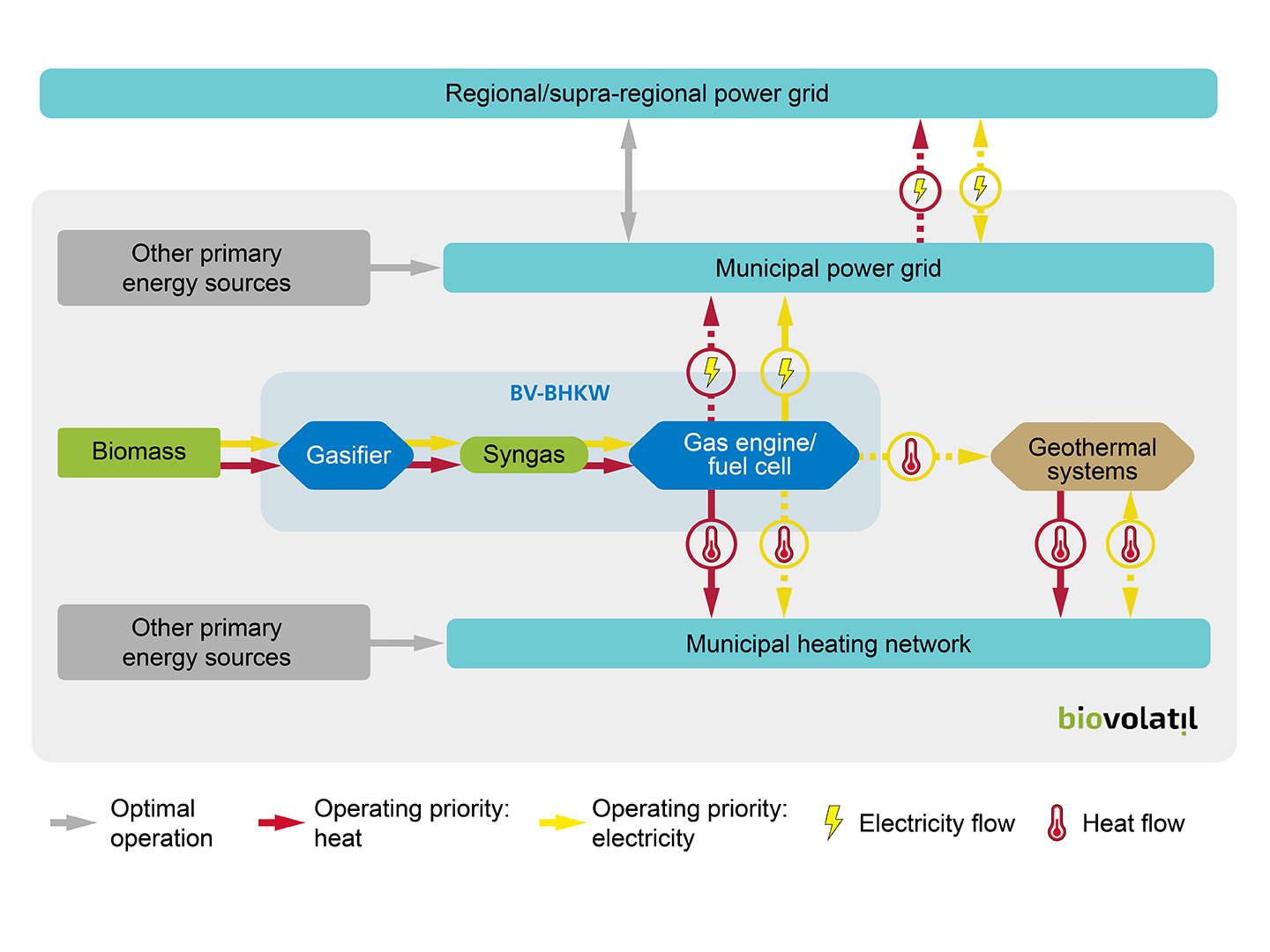
Within the joint project "biovolatil", a concept is being developed that is based on expanding existing systems with biomass gasifiers combined with combined heat and power plants (BV-BHKW) and geothermal systems (UTES). The gasification technology uses local biomass that that cannot be used elsewhere – sustainable feedstocks that can generate added value in BV-BHKW plants. We evaluate the different types of gasifiers and conduct practical tests on a commercial BV-BHKW to optimise operability and generate data for model development.
The use of UTES allows heat to be stored and balanced seasonally. This increases the efficiency of the BV-BHKW plants. In particular, medium-depth UTES, are used as their higher temperature level enables greater energy yield and more versatile heat supply. Seasonal charging increases the overall efficiency of the system by regenerating the temperature level underground with the heat stored during the warm months.
Integration into existing systems
The practicality of the new concept is tested using two model municipalities — Oberhausen and Zittau. We specifically assess the prerequisites in urban and rural areas to demonstrate integration into different existing systems. A before-and-after comparison illustrates reduction in greenhouse gases, increased autonomy to promote resilience, and economic viability.
 Joint research project "biovolatil"